
When you are facing quotes for dental implants that run into the thousands, the choice of clinician stops being a simple search and becomes a major life decision. If you are wondering how to choose implant specialists, the right question is not just who is cheapest or closest. It is who can plan your treatment properly, carry it out safely, and support you long after the implants are placed.
That matters even more if you have multiple missing teeth, failing dental work, or have been told you may need bone grafting or full-arch treatment. Implant dentistry can transform your smile, comfort and confidence, but it is not a one-size-fits-all service. The skill of the specialist and the structure around your care make a real difference.
How to choose implant specialists without guesswork
A strong implant provider should be able to explain your options clearly, show you how they diagnose complex cases, and talk honestly about whether implants are right for you. If the conversation feels rushed, sales-led or vague, that is a warning sign. Good implant care starts with careful assessment, not pressure.
Look first at training and focus. Many general dentists offer a wide range of treatments, but implant dentistry is a field where experience matters. You want to know who is actually placing the implant, how often they do it, and what kinds of cases they handle. A clinician who regularly treats single implants, multiple implants and full-arch cases is likely to have stronger judgement than someone who only places them occasionally.
This does not mean every patient needs the most high-profile surgeon in the market. A straightforward single implant is different from a full-mouth reconstruction. The key is matching the complexity of your case to the depth of the team’s expertise.
Check credentials, but also check the process
Patients often focus on qualifications because they are easy to compare. Qualifications matter, but process matters just as much. An implant specialist should work within a clear treatment pathway that covers consultation, scans, planning, surgery and aftercare.
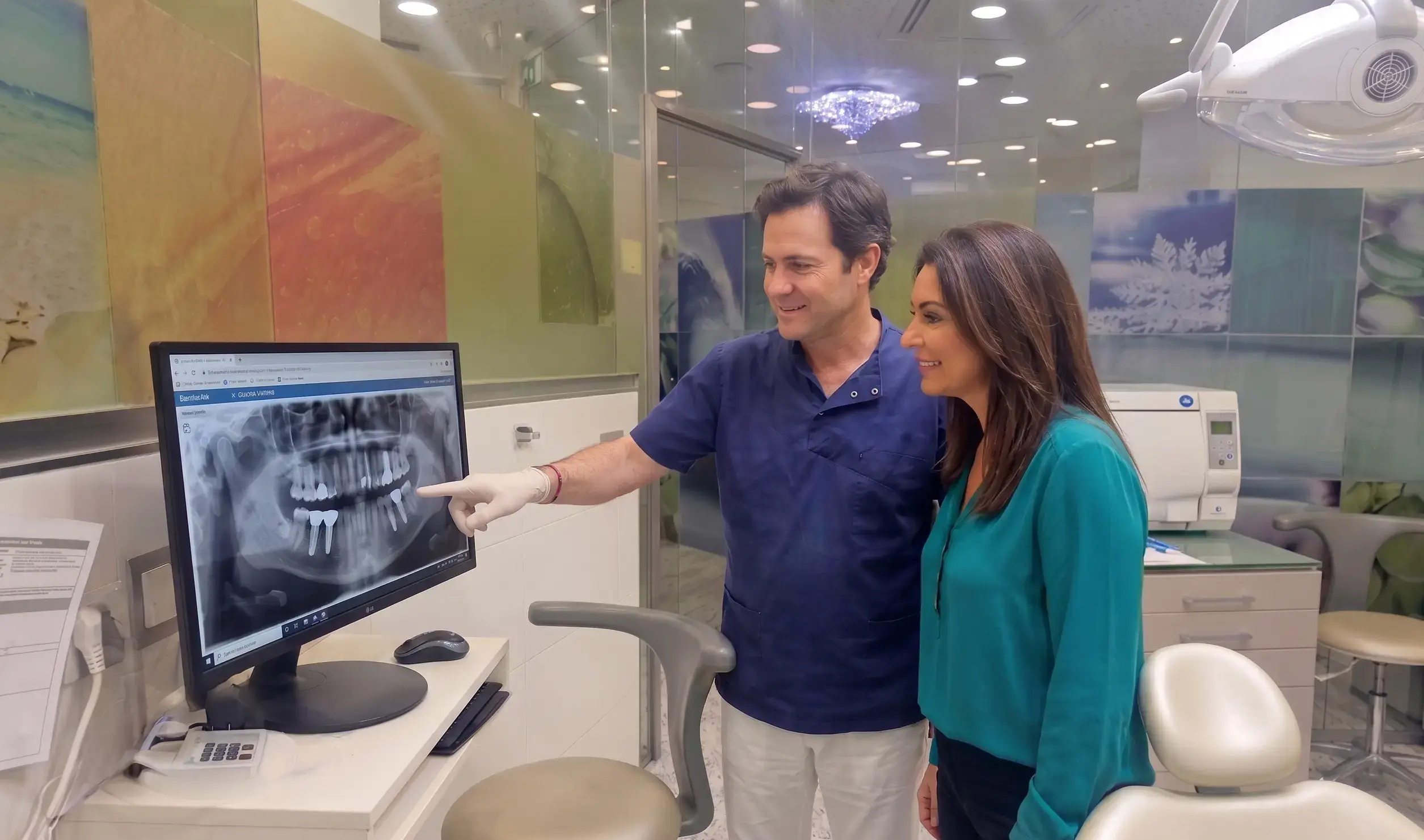
For example, a thorough provider will usually begin with detailed diagnostics rather than a quick glance and an estimate. That may include digital imaging, assessment of bone levels, bite analysis and a review of your overall oral health. If you have remaining failing teeth, wear, old bridges or loose dentures, those details need to be factored into the plan from the start.
You should also ask who is involved beyond the surgeon. Implant treatment often works best when it is planned by a wider team, especially for cosmetic and full-arch cases. Surgery, restoration and aftercare need to line up.
What good implant planning looks like
The best specialists do not jump straight to the implant. They step back and look at the final result first. That means asking where the new tooth or teeth need to sit, how they will function, how they will look when you smile, and whether the surrounding bone and gum support the plan.
This is especially important for patients comparing UK prices with treatment abroad. Lower cost can be a major advantage, but only if the planning is disciplined and the journey is managed properly. If diagnostics, surgery and aftercare are split across different providers with no clear coordination, patients can feel exposed. On the other hand, a cross-border model can work extremely well when the pathway is structured, transparent and backed by specialist care at each stage.
That is why it is worth asking practical questions. Where will your consultation happen? Who explains the scans? Who places the implants? Where do reviews and aftercare take place? If adjustments are needed later, what is the route back into care? Clear answers usually signal a mature, organised service.
How to compare value, not just price
Implants are a major investment, so cost will always be part of the decision. But the cheapest quote is not automatically the best value. Two prices that look similar on paper may include very different levels of planning, materials, sedation options, temporary teeth, follow-up care and guarantees.
Ask for a proper breakdown. You want to know whether the quote includes diagnostics, extractions if needed, bone grafting if required, the implant itself, the abutment, the final crown or bridge, and all review appointments. If you are looking at full-arch treatment such as All-on-4 or All-on-6, clarity becomes even more important because these cases are more complex and the treatment stages can vary.
There is also the question of false economy. Saving money matters, especially when UK private fees have become difficult for many households to justify. But if a low headline price leads to repeated travel, limited support or corrective work later, the initial saving can disappear quickly. Real value means expert treatment, predictable planning and a patient journey that does not leave you chasing answers.
Signs you can trust an implant provider
Trust is built through evidence, not promises. A reputable implant specialist should be comfortable showing case examples, explaining likely timelines and discussing risks in plain English. They should not pretend every case is simple, because some are not.
A trustworthy provider will also be honest about suitability. Not everyone can have implants immediately. Some patients need extra preparation, and some may be better suited to alternative options depending on bone levels, medical history or lifestyle factors. A clinician who tells you what you need to hear is less valuable than one who tells you what you need to know.
Pay attention to how they discuss complications too. Every surgical procedure carries some level of risk. The right specialist does not dismiss that. They explain how risks are reduced, how healing is monitored and what support is available if anything does not go to plan.
Questions worth asking before you commit
If you are still deciding how to choose implant specialists, a good consultation should leave you with clear answers to a few core questions. How many implant cases like yours does the clinician handle? What is the full treatment timeline? What happens if you need preparatory treatment? How is the final result designed? What aftercare is included?
You should also ask how the service fits your life. If you work full time, care for family or travel a long distance, convenience matters. Many patients are not just buying a procedure. They are buying certainty, coordination and fewer headaches along the way.
That is one reason some people prefer a model with UK consultations and aftercare combined with treatment in a highly experienced overseas implant centre. Done properly, it can give you specialist-led care, significant savings and a smoother overall experience. Smile Savers has built its approach around exactly that balance – expert planning, lower costs and a managed journey that helps patients feel looked after rather than left to figure it all out alone.
Red flags patients often miss
Some warning signs are obvious, such as pushy sales tactics or unclear pricing. Others are easier to miss. Be cautious if you never meet the person planning your treatment, if no one discusses long-term maintenance, or if the provider seems more interested in speed than suitability.
Another red flag is overconfidence. Implant specialists should be reassuring, but they should also be realistic. Healing times vary. Bone quality varies. Existing dental problems can affect the plan. If everything is presented as guaranteed, instant and effortless, ask more questions.
Patient reviews can help, but read them sensibly. A long history of positive outcomes is more meaningful than a handful of glowing comments with no detail. Look for signs that patients felt informed, supported and cared for throughout the process, not just happy on the day of treatment.
The right specialist should make the whole journey feel clearer
Choosing an implant specialist is not about finding the flashiest clinic or the lowest quote. It is about finding a team with the judgement, structure and experience to deliver a result that lasts. The right provider will make complex treatment feel understandable. They will be upfront about costs, careful with planning and steady in their support.
If a consultation leaves you feeling more confident, more informed and less pressured, that is usually a good sign. Dental implants can improve your teeth, your appearance and your day-to-day life, but the best results start with a specialist who treats the decision with the seriousness it deserves. Take your time, ask better questions, and choose the team that gives you confidence before they ever pick up an instrument.